You Won’t Believe What I Found in Hanoi’s Hidden Markets
Hanoi isn’t just pho and motorbikes—its shopping streets are a photographer’s dream. I wandered through narrow alleys bursting with color, texture, and life, camera in hand, completely hooked. From handmade silks to vintage street stalls, every corner told a story waiting to be captured. This is more than shopping—it’s a visual journey into Vietnam’s soul. If you’ve ever loved a city that feels real, you need to see Hanoi through the lens.
The Pulse of Hanoi: Where Shopping Meets Storytelling
Hanoi’s markets are not simply places to buy goods—they are living narratives, woven from tradition, resilience, and quiet artistry. Unlike the sterile predictability of modern malls, these streets pulse with rhythm, where every vendor, basket, and bolt of fabric contributes to a larger cultural symphony. The Old Quarter, with its 36 ancient streets each historically dedicated to a specific craft or trade, remains the city’s beating heart. Here, the scent of turmeric mingles with the metallic clink of copper pots, while silk ribbons flutter above baskets of starfruit and lotus seeds. This is commerce as performance, where bartering is a dance and every transaction carries a whisper of history.
For the thoughtful traveler, especially one with a camera, Hanoi offers something increasingly rare: authenticity. There’s no curated aesthetic designed for Instagram—just real life, unfolding in vivid layers. The sensory richness—colors so bold they seem painted, sounds that layer like music, textures you can almost feel through a photograph—makes it a paradise for visual storytelling. Photographers don’t just capture images here; they document a way of life that has adapted, endured, and thrived amid rapid urban change. It’s this blend of tradition and tenacity that transforms a simple market stroll into a profound human experience.
What makes Hanoi’s shopping culture particularly compelling is its accessibility. You don’t need a guidebook to stumble upon magic. Turn down an alley with peeling yellow walls, follow the sound of chopping herbs, and you might find an elderly woman arranging hand-embroidered collars on a wooden plank. These moments aren’t staged—they’re part of the daily rhythm. For women aged 30 to 55, many of whom value connection, craftsmanship, and meaningful experiences over luxury, Hanoi’s markets offer a deeply satisfying form of travel—one rooted in discovery, respect, and quiet wonder.
Dong Xuan Market: Chaos with Character
Dong Xuan Market, Hanoi’s largest covered market, is a microcosm of the city’s relentless energy. Located in the heart of the Old Quarter, it sprawls across multiple floors, each dedicated to a different facet of daily life. The ground level teems with fresh produce—pyramids of dragon fruit, bunches of water spinach, and glistening fish laid out on ice. The air is thick with the scent of ginger, fish sauce, and ripe jackfruit. Ascend to the upper floors, and the scene shifts to textiles, clothing, and souvenirs: bolts of silk in jewel tones, hand-stitched linen, and embroidered children’s dresses arranged with care.
For photographers, Dong Xuan is both a challenge and a treasure. The lighting is dramatic—early morning light filters through cracked skylights, casting soft beams that illuminate dust motes and the edges of conical hats worn by vendors. These conditions lend themselves to moody, documentary-style photography, where shadows and highlights tell as much of the story as the subjects themselves. The contrast between the dim interior and the sudden flash of neon from a signboard creates visual tension that can elevate a simple snapshot into a compelling narrative.
Yet with such intimacy comes responsibility. Ethical photography is non-negotiable in spaces like Dong Xuan. Many vendors are working hard to support their families, and snapping photos without permission can feel invasive. The respectful approach is simple: make eye contact, smile, and gesture to your camera. A nod or a quiet “co duoc khong?” (“Is it okay?”) goes a long way. Most people are happy to be photographed if approached with kindness. When you honor their dignity, the resulting images carry emotional weight—they reflect not just what you saw, but how you engaged.
Railway Street & Hidden Alley Markets
A short distance from the city center lies one of Hanoi’s most unexpected corners: Railway Street, where homes and tiny shops are built mere inches from the active train tracks. Here, commerce thrives in the most precarious of settings. As the train approaches—announced by a ringing bell and a lowering gate—vendors quickly fold their awnings and pull in their wares. Once the train passes, life resumes as if nothing happened. It’s a rhythm perfected over decades, and it draws photographers eager to capture the contrast between danger and daily routine.
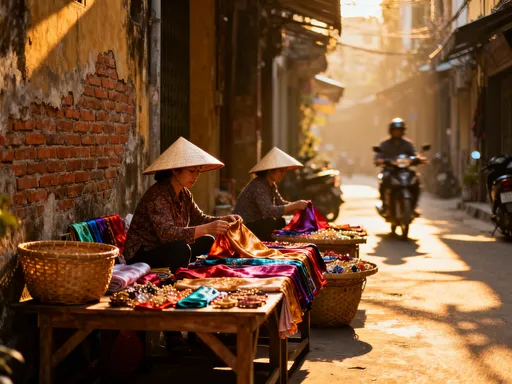
The alley markets surrounding the tracks are equally captivating. These narrow lanes, often no wider than a person’s outstretched arms, host stalls selling handmade jewelry, upcycled clothing, and local artwork. You’ll find earrings made from repurposed metal, scarves dyed with natural indigo, and postcards painted by street artists. These spaces are not designed for tourists, which makes them all the more authentic. For the discerning eye, they offer a chance to photograph creativity born from constraint—beauty emerging in the cracks of the urban landscape.
The best time to visit is late afternoon, when the setting sun bathes the graffiti-covered walls in golden light. This is the golden hour at its most cinematic—soft, warm, and full of atmosphere. The low-angle light highlights textures: peeling paint, woven baskets, the creases in a vendor’s apron. It’s an ideal moment for street photography that balances aesthetic appeal with human presence. A wide-angle lens can capture the tight geometry of the alleys, while a prime lens allows for intimate portraits without intrusion. The key is patience—waiting for the right moment when light, gesture, and expression align.
Craft Villages on the City’s Edge
Beyond Hanoi’s bustling core lie centuries-old craft villages, where traditional skills are preserved with quiet pride. Bat Trang, a ceramics village just a 30-minute motorbike taxi ride from the city, is a visual feast. Rows of kilns dot the landscape, and workshops display everything from delicate teacups to massive vases glazed in cobalt blue and celadon green. Watching a potter shape clay on a spinning wheel is mesmerizing—their hands move with precision and calm, as if guided by muscle memory passed down through generations.
Equally remarkable is Van Phuc, the silk weaving village nestled along the Red River. Here, families operate wooden looms in open-air workshops, creating fabrics that shimmer in the sunlight. The process is labor-intensive: silk threads are dyed using natural pigments, then woven into patterns that range from simple stripes to intricate floral motifs. Visitors can watch the entire process, from cocoon to finished scarf, and even try their hand at weaving under patient guidance.
For photographers, these villages offer controlled yet authentic environments. The lighting is often soft and diffused, ideal for capturing detail without harsh shadows. However, the glossy surfaces of ceramics and the reflective sheen of silk can create glare. A polarizing filter is highly recommended—it reduces reflections and enhances color saturation, making the deep blues and reds of dyed fabric appear richer. Additionally, shooting during mid-morning or mid-afternoon avoids the harsh overhead light of noon, preserving the subtlety of textures and tones.
What makes these villages so emotionally resonant is their continuity. In an age of mass production, they stand as testaments to patience, skill, and cultural memory. For women who value craftsmanship and sustainability, these communities offer inspiration—not just for photographs, but for a slower, more intentional way of living.
Photographing People & Daily Commerce
No photo essay of Hanoi’s markets is complete without the human element. The city’s commerce is carried on the backs of porters balancing baskets on bamboo poles, the fingers of elderly women folding scarves with practiced ease, and the quick hands of children passing goods from stall to stall. These are not background details—they are the soul of the scene. Their presence adds depth, context, and emotional truth to any image.
Building trust is essential when photographing people in these spaces. A smile is universal. Pointing to your camera and waiting for a nod establishes consent and respect. Rushing in with a lens can feel aggressive; slowing down invites connection. Some of the most powerful images come from moments of interaction—when a vendor laughs at your clumsy attempt to haggle, or a child mimics your pose. These are not staged—they are shared experiences, frozen in time.
From a technical standpoint, a 35mm or 50mm lens is ideal for this kind of work. These focal lengths allow you to get close enough for intimacy without invading personal space. They also mimic the human field of vision, making the resulting images feel natural and immersive. Avoid zooming in from a distance—it can feel voyeuristic. Instead, step in, engage, and let the moment unfold. The best portraits often happen after the initial shot, when the subject relaxes and reveals something genuine.
It’s also important to recognize the dignity in labor. These vendors are not performers; they are professionals running small businesses. Photographing them with respect means capturing their focus, their pride, their resilience. A woman arranging dried shrimp with meticulous care deserves the same attention as a model on a runway. When you honor the work, your images become more than pretty pictures—they become tributes.
Practical Tips for the Visual Explorer
For women planning a photographic journey through Hanoi’s markets, preparation enhances both safety and creativity. Start with timing: the best light occurs between 6:00 and 8:00 a.m., when the city wakes up and the markets are most active. Morning light is soft, golden, and full of atmosphere—perfect for capturing the first stirrings of commerce. By midday, the sun becomes harsh, creating unflattering contrasts and washed-out colors.
Carrying your gear safely is crucial in crowded spaces. Use a crossbody bag with a secure zipper—this keeps your camera within reach while freeing your hands. Consider a rain cover for your camera; Hanoi’s sudden showers are common, especially in the rainy season. A small, absorbent towel can also help dry equipment quickly if needed.
Navigation in the Old Quarter can be disorienting, but tools like Google Maps are surprisingly effective, even in narrow alleys. Download offline maps before arrival to avoid data issues. Wi-Fi is widely available in cafes, but connectivity can be spotty in deeper alleys. A portable phone charger is essential—long days of walking and photographing drain batteries fast, and you don’t want to miss a moment because your phone is dead.
When it comes to money, cash is king in Hanoi’s markets. ATMs are plentiful, but it’s wise to carry small denominations—20,000 and 50,000 VND notes—for haggling. Prices are often negotiable, and paying in small bills gives you flexibility. Always have a smile ready—humor and kindness go further than aggressive bargaining. And remember, haggling isn’t about winning; it’s about mutual respect. A fair price benefits both buyer and seller.
Why Hanoi Stays With You—Beyond the Frame
Hanoi’s markets linger in the mind long after the trip ends. They stay not because of the souvenirs bought or the photos taken, but because of the feeling they evoke—a sense of connection to something real and enduring. In a world increasingly filtered and curated, Hanoi offers unvarnished truth: the creases in a vendor’s hands, the weight of a handwoven bag, the warmth of a shared smile across a language barrier.
What makes these scenes unforgettable is their imperfection. A frayed hem on a silk scarf, a chipped bowl in a ceramics stall, the way a train rumbles past a child’s drawing pinned to a wall—these details are not flaws; they are evidence of life in motion. They remind us that beauty doesn’t require polish. It thrives in the everyday, in the work, in the quiet persistence of people who create, sell, and survive with grace.
For the thoughtful traveler, especially one who values depth over spectacle, Hanoi is a revelation. It invites you to look beyond the surface, to see the hands behind the goods, the stories behind the smiles. It asks you to shoot not just with your camera, but with your heart. Every click should carry respect, curiosity, and gratitude.
So if you’re seeking a destination that challenges, inspires, and transforms, consider Hanoi. Walk its alleys, talk to its people, and let the city reveal itself in fragments—a bolt of fabric, a shared laugh, a moment of light on a weathered face. These are the images that stay with you. Not because they’re perfect, but because they’re true.