You Won’t Believe These Hidden Art Spots in Guanajuato
Guanajuato isn’t just a colorful city—it’s a living canvas. Wandering its cobblestone streets, I kept stumbling on open-air murals, tucked-away galleries, and stairways transformed into art. Every corner pulses with creativity. If you’re chasing photo spots that feel authentic and unforgettable, this place delivers. Here’s where to find the city’s most stunning art spaces—no filters needed.
The Soul of a City Painted in Color
Guanajuato, nestled in a narrow valley of the central Mexican highlands, is more than a postcard-perfect town with its cascading colonial buildings and rose-hued stone facades. As a designated UNESCO World Heritage site since 1988, the city stands as a testament to the harmonious blend of European architectural traditions and indigenous craftsmanship. Its winding streets, carved into steep hillsides, create a natural amphitheater where art doesn’t merely hang on walls—it spills into alleys, climbs staircases, and dances across rooftops. This organic integration of art into urban life is not accidental; it is deeply rooted in Mexico’s cultural identity, where public expression has long served as a bridge between history, community, and imagination.
What sets Guanajuato apart is how its topography enhances artistic visibility. The city’s vertical layout means that murals painted on lower walls can be admired from upper terraces, while rooftop installations catch the eye of pedestrians navigating narrow passageways below. This three-dimensional canvas invites viewers to engage with art from multiple vantage points, making every ascent or descent a visual discovery. The local government and cultural organizations have actively supported this tradition, commissioning artists to revitalize neglected spaces and transforming forgotten corners into points of pride. As a result, art in Guanajuato is not confined to galleries—it breathes in the open air, accessible to all, regardless of background or status.
For visitors, especially women between 30 and 55 who value meaningful travel experiences, Guanajuato offers something rare: beauty with depth. It’s a place where aesthetics meet authenticity, where every painted surface tells a story of resilience, celebration, or quiet reflection. Whether it’s a vibrant depiction of local harvest festivals or a subtle tribute to historical figures etched into a stone wall, the art here reflects the soul of the people. This cultural richness makes Guanajuato not just a destination to see, but a place to feel—a city that lingers in memory long after departure.
Alleyways That Speak: Callejón del Beso and Beyond
No visit to Guanajuato feels complete without walking through the legendary Callejón del Beso, or Alley of the Kiss. Known for its romantic folklore—a tale of star-crossed lovers who met secretly in this narrow passage—it has become one of the city’s most photographed spots. But beyond the myth lies a deeper artistic truth: this alley, barely wide enough for two people to pass, functions as an intimate art corridor where color, light, and texture converge. The walls, painted in warm terracotta and soft peach tones, are adorned with floral garlands, wrought-iron lanterns, and occasional hand-painted messages in elegant script. At sunrise or just before dusk, golden light filters down from above, casting long shadows and illuminating the intricate details of the masonry.
While many tourists rush through the alley for a quick photo, those who pause begin to notice how the space itself is curated like a living exhibit. Local florists often place fresh bouquets in niches along the walls, changing with the season—marigolds during Día de Muertos, roses in spring, and wildflowers in summer. These floral arrangements are not merely decorative; they are part of an unspoken tradition of beautifying shared spaces, reflecting a communal sense of care and pride. For photographers, this presents a unique opportunity to capture not just architecture, but emotion—the tenderness implied by the legend, enhanced by the delicate interplay of nature and human touch.
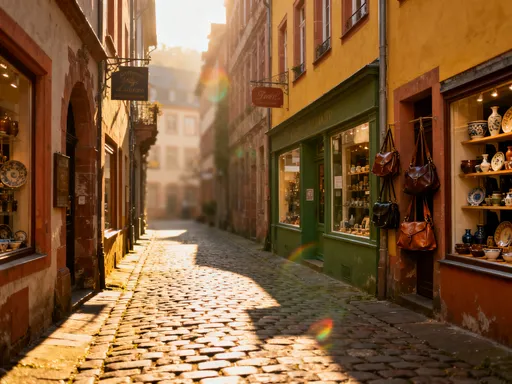
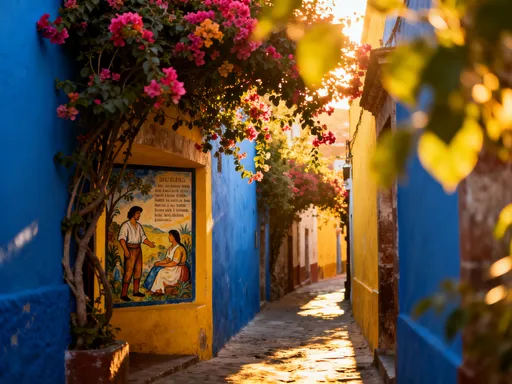
Yet Callejón del Beso is only the beginning. Just a few blocks away, lesser-known alleys like Callejón de los Pajaritos and Callejón de la Condesa offer equally enchanting experiences without the crowds. These passages feature spontaneous street art—small-scale murals depicting birds, children playing, or traditional folk motifs—that feel more personal, less commercialized. Some walls bear poems stenciled in cursive, their words fading gently with time, adding a poetic layer to the urban fabric. Walking these quieter routes at golden hour, when the sun slants across the canyon walls, transforms an ordinary stroll into a cinematic journey. For the thoughtful traveler, these alleys are not just pathways—they are conversations between past and present, whispered in color and light.
Museums with a Modern Pulse: From Regional Art to Avant-Garde
While Guanajuato’s outdoor art captivates at every turn, its museums provide a structured space to appreciate the evolution of Mexican artistic expression. The Museo de Arte de Guanajuato, housed in the striking 18th-century former convent of San Francisco, stands as a cornerstone of the city’s cultural landscape. Managed by the state university, the museum blends historical reverence with contemporary vision. Its permanent collection includes works by regional masters such as Saturnino Herrán and Mauricio Noguez, whose paintings capture the dignity of rural life and the complexity of Mexican identity. These pieces, often rendered in rich oils with dramatic contrasts of light and shadow, offer a counterpoint to the city’s bright murals, reminding visitors that art in Guanajuato is not only celebratory but also introspective.
In recent years, the museum has embraced modern and experimental exhibitions, hosting rotating displays that feature digital installations, mixed-media sculptures, and conceptual photography. One recent exhibit explored the theme of water scarcity through suspended glass droplets filled with soil from different Mexican states—an evocative commentary on environmental change. These forward-thinking shows attract younger audiences while still resonating with older visitors who appreciate layered storytelling. The museum’s curators emphasize accessibility, offering bilingual placards and guided tours in both Spanish and English, ensuring that international guests can fully engage with the content.
Practical considerations enhance the visitor experience. The museum is open Tuesday through Sunday from 10 a.m. to 6 p.m., with free admission on Sundays for Mexican nationals and discounted rates for seniors. Photography is permitted in most galleries, provided flash is not used, allowing guests to quietly document pieces that move them. After a visit, many travelers retreat to Café del Museo, a small café tucked in the cloister garden, where they sip locally grown coffee beneath arches draped in bougainvillea. This seamless blend of contemplation and comfort makes the museum not just an educational stop, but a restorative one—a place to pause, reflect, and reconnect with the deeper currents of creativity.
Plazas as Living Galleries: Jardín de la Unión and Plaza de San Fernando
In Guanajuato, public squares are not static spaces—they are dynamic stages where art, music, and daily life perform in harmony. Jardín de la Unión, the city’s main plaza, exemplifies this vibrancy. Ringed by neoclassical buildings with arched colonnades, the garden center features a wrought-iron kiosk that once hosted military bands and now serves as a backdrop for folk dancers and acoustic musicians. Bronze statues of literary and cultural figures—like the poet José Martí—stand beneath shade trees, their surfaces polished by generations of hands. Around them, families gather on benches, children chase pigeons, and street vendors sell hand-painted fans and paper flowers. The entire scene feels like a living painting, constantly shifting yet rooted in tradition.
What many visitors may not realize is that Jardín de la Unión functions as a rotating open-air gallery. During festivals such as the Cervantino Festival each October, temporary art installations appear—kinetic sculptures that spin in the breeze, fabric banners suspended between lampposts, or illuminated cubes that change color at night. These additions transform the plaza without overwhelming it, maintaining the balance between function and beauty. Photographers will find endless compositions here: a musician framed by a statue’s outstretched arm, a child reaching toward a floating balloon, or the play of afternoon light on a mosaic-tiled bench. The key is patience—waiting for the moment when movement and stillness align.
Equally compelling is Plaza de San Fernando, a quieter square tucked near the Basilica de Nuestra Señora de Guanajuato. Here, the atmosphere is more contemplative, with elderly residents playing dominoes under porticos and artisans setting up small pop-up displays of painted tiles and embroidered textiles. A central fountain, carved from pink cantera stone, features a sculptural group of dolphins—a nod to the city’s unexpected connection to maritime symbolism through its historic silver trade. Unlike the busier plazas, San Fernando offers intimacy, making it ideal for candid photography that captures genuine human interaction. Visitors are encouraged to sit, observe, and allow the rhythm of the space to unfold naturally. In doing so, they don’t just witness culture—they become part of it.
Hidden Staircases and Murals: Off-the-Beaten-Path Photo Gold
One of Guanajuato’s best-kept secrets lies in its network of pedestrian staircases, which connect the city’s upper and lower levels. While maps may overlook them, these stairways are among the most expressive canvases in town. In neighborhoods like Pastita and La Valenciana, local artists and collectives have transformed plain concrete steps into cascading murals. One such staircase, known informally as the Escalera de los Colores, features a gradient of painted tiles that shift from deep indigo at the bottom to sunlit yellow at the top—a symbolic journey from night to day. Each step is individually adorned, some with geometric patterns inspired by pre-Hispanic designs, others with floral motifs or quotes from Mexican poets.
These artworks are not government-commissioned; they emerge from community initiatives led by groups like Colectivo Mural Guanajuato, which organizes volunteer painting days and collaborates with schools to involve youth in public art. This grassroots origin gives the murals an authenticity that resonates deeply with visitors seeking real connections. Unlike polished tourist attractions, these spaces feel lived-in, evolving, and deeply personal. For photographers, they offer dramatic perspectives—shooting upward to capture a figure ascending into light, or downward to frame a spiral of color winding into the city below.
Navigating these areas requires a bit of preparation. While generally safe during daylight hours, some staircases are steep and uneven, so wearing supportive footwear is essential. The best time to visit is mid-morning, when the sun illuminates the upper sections without creating harsh glare. A lightweight backpack with water and a small towel is advisable, especially in warmer months. Most importantly, visitors should approach these spaces with respect—avoiding loud conversations or obstructing residents who use the stairs daily. By doing so, they honor the true spirit of Guanajuato: a city where art is not imposed, but grown from within.
Art Markets and Creative Hubs: Where Inspiration Becomes Tangible
For those who wish to bring a piece of Guanajuato home, the city’s markets and artisan workshops offer more than souvenirs—they provide a direct link to living craftsmanship. Mercado Hidalgo, the central market, is a sensory feast. Under its iron-and-glass roof, vendors display pyramids of spices, baskets of dried chiles, and stalls overflowing with handmade goods. It is in the craft sections, however, that artistry truly shines. Here, potters from nearby San Miguel de Allende sell Talavera-style dishes painted with intricate floral patterns in cobalt and gold. Weavers from the Otomí communities offer rebozos—traditional shawls—dyed with natural pigments and embroidered with delicate threadwork. Each item is unique, bearing the subtle imperfections that signify human hands at work.
Beyond the market, small workshops in the city’s outskirts invite deeper engagement. In the village of San Clemente, just a short bus ride away, families have practiced tin artistry for generations. Inside sunlit courtyards, artisans cut, emboss, and paint sheets of metal into ornamental frames, lanterns, and devotional pieces. Visitors are often welcomed to watch, ask questions, and even try their hand at simple designs. These interactions create meaningful memories far beyond any photograph. For women travelers, especially those who value creativity and connection, such experiences offer a rare sense of intimacy and respect.
When photographing artisans, ethical practices are paramount. Always ask permission before taking close-up shots, especially if the person is working or interacting with customers. A smile and a simple gesture—pointing to your camera and nodding—often suffice. If granted, focus on details: hands shaping clay, brushes gliding over metal, threads interlacing in a loom. These images convey dignity and skill without intrusion. Purchasing a piece not only supports the local economy but also deepens the bond between traveler and maker—a silent acknowledgment of shared humanity expressed through art.
Chasing Light: Timing and Technique for the Best Shots
To truly capture Guanajuato’s artistic essence, understanding light is as important as knowing where to go. The city’s unique geology—surrounded by rose-colored canyons and built from ochre-hued stone—responds dramatically to the sun’s movement. The golden hours, just after sunrise and before sunset, offer the most flattering illumination. During these times, the walls glow with warmth, shadows stretch long and soft, and the air carries a golden haze that enhances depth and texture. Early risers are rewarded with near-empty streets, allowing for unobstructed compositions of alleyways and staircases bathed in morning light.
For optimal results, a few technical choices make a difference. A wide-angle lens helps capture the full sweep of narrow alleys and panoramic plazas, while a polarizing filter reduces glare on stone and glass surfaces. However, even smartphone cameras can produce stunning images when used mindfully. Turning on grid lines helps align architectural lines, and using the HDR mode balances bright skies with shadowed details. Tapping the screen to focus on a specific area—like a painted flower or a musician’s face—ensures clarity. For low-light situations, such as evening shots in dimly lit alleys, stabilizing the phone against a wall or using a compact tripod prevents blur.
Equally important is the philosophy behind the lens. Guanajuato invites slow, intentional photography—not the rush of snapping dozens of shots, but the care of waiting for the right moment. It means stepping back to let a local pass through a frame, or pausing to listen to a song before capturing the performer. It means recognizing that some of the most powerful images are not the most colorful, but the most human. By shooting with respect and presence, travelers do more than document a place—they honor it. And in return, Guanajuato reveals not just its beauty, but its heart.
Guanajuato’s art spaces aren’t just backdrops—they’re stories in color and texture. By seeking out both celebrated and hidden corners, travelers don’t just take photos; they connect with a living culture. The city invites you to look closer, shoot thoughtfully, and carry home more than images: a deeper sense of place.