Nature’s Stone Masterpieces: When Art Meets Geology in Arches National Park
You know that feeling when you stumble upon something so surreal, it looks like it was sculpted by human hands—but it’s 100% nature? That’s Arches National Park. I never expected wind and water to be such brilliant architects. With over 2,000 natural stone arches carved into red rock monoliths, this place feels like walking through an open-air cathedral of earth’s own design. Each formation tells a story of time, pressure, and erosion—silent, stunning, and absolutely mind-blowing. Standing beneath a massive sandstone arch at sunrise, with the desert air still cool and the rocks glowing in warm hues, one cannot help but feel a deep sense of awe. This is not just a landscape; it is a masterpiece shaped over millions of years, inviting quiet reflection and creative inspiration.
The Art of Erosion: How Nature Became an Architect
Arches National Park, located in southeastern Utah, is a testament to the quiet yet relentless power of natural forces. The formations that rise from the desert floor are not the work of chisels or cranes, but of geological processes that began over 300 million years ago. At the heart of this transformation lies a layer of salt—a remnant of an ancient sea that once covered the region. As sediments accumulated above, the salt layer shifted and cracked under pressure, creating underground faults and domes. Over time, water seeped into these fractures, dissolving the salt and weakening the rock structure above.
The park’s iconic red sandstone, known as Entrada Sandstone, is particularly susceptible to weathering. When rainwater—slightly acidic from atmospheric carbon dioxide—meets the rock, it slowly dissolves the calcite that binds the sand grains together. This process, known as chemical weathering, works alongside physical forces like freeze-thaw cycles. In winter, water trapped in cracks freezes and expands, prying the rock apart piece by piece. Wind then scours the exposed surfaces, smoothing edges and hollowing out alcoves. It is this combination of salt tectonics, water, wind, and time that has given rise to the park’s most striking feature: natural arches.
Remarkably, the formations resemble deliberate architectural styles. Some arches, with their soaring curves and slender pillars, evoke the ribbed vaults of Gothic cathedrals. Others, with clean lines and minimalist profiles, mirror modernist design. Landscape Arch, for instance, stretches nearly 300 feet across with a span so thin it seems to defy gravity—its form echoing the elegant simplicity found in contemporary sculpture. Though no blueprint guided their creation, these structures reflect principles of balance and proportion that architects have long sought to master. Nature, in its patient way, has become one of the world’s most subtle and enduring artists.
A Living Gallery: The Most Iconic Arches and Their Aesthetic Appeal
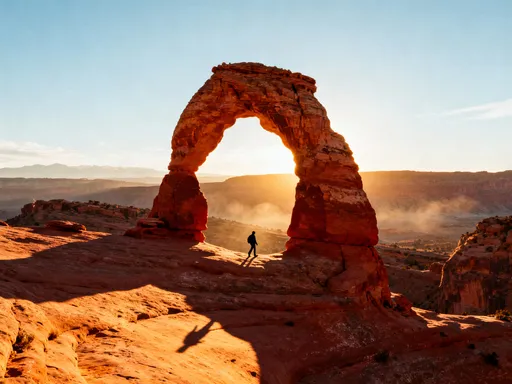
Walking through Arches National Park is like stepping into a gallery where every exhibit is one-of-a-kind and constantly changing. Among the more than 2,000 documented arches, a few stand out not only for their size but for their visual impact. Delicate Arch, perhaps the most photographed formation in the park, rises 52 feet tall in a graceful curve that frames the distant La Sal Mountains. Its isolation on a sandstone fin gives it a solitary dignity, especially at sunset when the entire structure seems to ignite in golden light. This is not just a geological feature; it is a symbol of natural elegance, so iconic that it appears on Utah’s license plates.
Landscape Arch, located in the park’s remote Devils Garden area, holds the distinction of being one of the longest natural stone spans in the world. At just under 300 feet, its span is comparable to a football field laid on its side, yet in some places the arch is only about seven feet thick. The contrast between its immense scale and fragile appearance creates a powerful visual tension. Visitors often stand in silence beneath it, struck by the paradox of strength and delicacy. Over the years, small rockfalls have thinned the arch further, reminding all who see it that even the most enduring forms are in constant flux.
Double Arch, another breathtaking formation, consists of two massive arches rising side by side from a single base, like stone wings unfurling from the earth. The symmetry of this structure is striking, and its cavernous openings invite exploration and reflection. Photographers and artists are drawn to these arches not only for their shapes but for the way light transforms them throughout the day. In the early morning, long shadows stretch across the rock, emphasizing texture and depth. At midday, the sun bleaches the surface, revealing intricate layers of sediment. And at dusk, warm tones of red, orange, and purple wash over the formations, creating a fleeting masterpiece that exists for only a few minutes.
These natural sculptures have inspired countless visual interpretations. Some artists capture them in watercolor, emphasizing the soft gradients of light. Others use charcoal to highlight the stark contrasts of shadow and form. Photographers experiment with long exposures to convey motion in the stillness, or use drones to reveal patterns invisible from the ground. Each medium offers a new way to understand the arches—not just as geological curiosities, but as living works of art that evolve with every passing season.
Design Without a Blueprint: Patterns and Symmetry in Nature’s Structures
One of the most compelling aspects of Arches National Park is how its formations seem to follow intentional design principles, even though they emerged entirely by chance. The balance, symmetry, and proportion found in many arches resonate with human aesthetic preferences, suggesting a deeper connection between natural forms and artistic ideals. Take, for example, the way Delicate Arch stands in near-perfect balance on a narrow pedestal. Its curve follows a smooth arc that approximates the golden ratio—a mathematical proportion long associated with beauty in art and architecture. Though nature did not calculate this ratio, the result feels harmonious, almost intentional.
Repetition is another principle evident throughout the park. Along the Windows Section, a series of large arches—North Window, South Window, and Turret Arch—line up in a natural sequence, creating a rhythm that guides the eye. This repetition, much like a musical phrase, gives structure to the landscape and enhances its visual appeal. Similarly, the layered bands of sandstone, formed by centuries of sediment deposition, echo the horizontal lines found in minimalist design. These patterns are not arranged for human pleasure, yet they align with the same principles that artists and architects use to create order and beauty.
The sense of balance in these formations is not merely visual—it is structural. Arches form only when surrounding rock erodes away while the keystone remains intact. This delicate equilibrium is both literal and symbolic. It mirrors the concept of feng shui, where harmony is achieved through the careful arrangement of elements, or the Japanese aesthetic of wabi-sabi, which finds beauty in imperfection and transience. A thin section of Landscape Arch, weakened by time, may one day collapse, but in its current form, it embodies a fleeting moment of perfection.
Why do these accidental structures feel so “designed”? One explanation lies in human perception. Our brains are wired to recognize patterns, even in randomness. When we see symmetry, proportion, and repetition in nature, we interpret them as signs of order and meaning. In Arches National Park, this tendency is amplified by the sheer scale and clarity of the forms. The arches do not merely exist; they communicate. They speak of endurance, balance, and the quiet artistry of time. In this way, the park becomes more than a collection of rocks—it becomes a mirror for our own creative instincts, reflecting back the universal desire to find beauty in structure.
The Artist’s Itinerary: Best Spots for Inspiration and Creativity
For those seeking to capture the spirit of Arches National Park through art, the landscape offers endless opportunities. A well-planned itinerary can maximize both solitude and creative potential. The park’s scenic drive provides easy access to several major viewpoints, each offering a unique perspective. At Balanced Rock, a 3,600-ton boulder perched on a narrow base creates a dramatic subject for sketching or photography. The contrast between the massive stone and the open sky emphasizes scale and balance, making it a favorite among artists working in line and form.
The Windows Section is another ideal location, especially during the golden hours. North Window and South Window rise like natural doorways, framing the distant mesas in a way that invites contemplation. Sitting here with a sketchpad or camera, one can spend hours observing how light shifts across the rock, altering colors and shadows minute by minute. Turret Arch, slightly off the main path, offers a more intimate setting with fewer visitors, perfect for those who prefer quiet reflection.
For a more immersive experience, the trail to Delicate Arch is a must, though it requires a moderate hike of about 3 miles round-trip. The journey itself is part of the creative process—walking across slickrock, navigating stone steps carved by time, and gradually revealing the arch as you ascend. Artists often bring portable easels or journals to pause along the way, capturing smaller details like lichen patterns or cracked sandstone textures. Reaching the arch at sunrise allows for soft, diffused light and fewer crowds, creating a serene environment ideal for painting or meditation.
Those willing to venture further into Devils Garden will find Landscape Arch and a cluster of other formations that feel almost otherworldly. The trail here is longer and more rugged, but the reward is solitude and dramatic compositions. Park at the Devils Garden trailhead and hike the 1.6-mile loop to see multiple arches, including Double Arch and Partition Arch. Early morning visits ensure cooler temperatures and golden light that enhances depth and contrast. For photographers, a polarizing filter can reduce glare and bring out the rich reds in the rock, while wide-angle lenses capture the vastness of the formations.
Lesser-known spots like The Organ and Tower Arch offer unique vantage points away from the main routes. These areas require careful navigation and a good map, but they provide fresh perspectives for artists seeking original compositions. Evening visits to the Courthouse Towers area allow for stunning silhouettes against the twilight sky. Regardless of skill level, every visitor can find a personal connection to the landscape—whether through a detailed drawing, a poem, or simply a moment of quiet awe.
Beyond the Rocks: Artistic Expression Inspired by the Landscape
The influence of Arches National Park extends far beyond its boundaries, shaping regional and national artistic expression. The park’s dramatic forms and vivid colors have inspired generations of painters, photographers, writers, and craftspeople. In the mid-20th century, modernist artists began incorporating desert motifs into their work, drawn to the stark geometry and earthy palette. Today, local galleries in nearby Moab regularly feature exhibitions that interpret the park’s landscapes through abstract and representational art.
The National Park Service supports this creative dialogue through its Artist-in-Residence program, which invites visual artists, writers, and musicians to spend time in the park, creating work that reflects its natural and cultural significance. These artists lead public workshops, share their creative processes, and donate pieces to the park’s collection. Their presence fosters a deeper understanding of how nature fuels imagination. One past resident created a series of ink drawings that captured the intricate fracturing of sandstone, while another composed a soundscape using field recordings of wind through arches and footsteps on rock.
Visitors, too, are encouraged to engage creatively. Many bring journals to write poetry or reflections, while others practice plein air painting or photography. The park’s quiet expanses offer a rare space for uninterrupted thought, making it ideal for personal projects. Some families create collaborative art, such as rubbings of rock textures or nature collages using fallen leaves and stones (collected responsibly, without disturbing the environment). Schools and art groups often organize field trips to combine education with creative expression, teaching students how geology, light, and form intersect in nature.
The emotional resonance of the landscape often leads to deeply personal works. A woman visiting after a period of loss might write a letter to the horizon, finding comfort in the permanence of the rocks. A retired teacher might begin a watercolor series, rediscovering her passion for art amidst the red canyons. These expressions, though private, are part of a larger cultural conversation about beauty, resilience, and the human connection to place. Arches National Park does not just inspire art—it becomes part of the artist’s story.
Respecting the Masterpiece: Sustainable Visitation and Preservation Ethics
As admiration for Arches National Park grows, so does the responsibility to protect it. The very features that make the park so captivating are also its most fragile. Sandstone arches, though massive, are vulnerable to even minor disturbances. Walking off designated trails can damage cryptobiotic soil—a living crust of algae, fungi, and bacteria that stabilizes the desert floor and takes decades to recover once disturbed. Climbing on arches or balancing on narrow fins accelerates erosion and risks irreversible harm. In 1991, a rockfall from Landscape Arch removed a 70-foot slab, a reminder that these structures are in constant, delicate equilibrium.
The National Park Service has established clear guidelines to ensure sustainable visitation. Visitors are asked to stay on marked trails, avoid touching rock surfaces (oils from skin can degrade the stone), and refrain from removing any natural materials. Drones are prohibited to protect wildlife and preserve the tranquility of the landscape. These rules are not arbitrary; they are based on scientific research and long-term monitoring of environmental impact. By following them, visitors become stewards of the park, helping to ensure that future generations can experience its wonders.
Tourism, while beneficial for local economies, places pressure on infrastructure and ecosystems. The park has implemented a timed entry reservation system during peak seasons to manage crowds and reduce congestion. This not only improves the visitor experience but also minimizes wear on trails and roads. Educational programs at the visitor center explain the geology and ecology of the park, fostering a sense of connection and responsibility. Rangers often share stories of how small actions—like staying on the path—make a big difference over time.
Responsible behavior also includes respecting wildlife and other visitors. Mule deer, lizards, and birds call this landscape home, and feeding or approaching them disrupts natural behaviors. Quiet observation allows for deeper appreciation and reduces stress on animals. For families, teaching children to admire without touching instills lifelong values of conservation. Ultimately, visiting Arches is not just about taking photographs or checking a destination off a list—it is about participating in a shared commitment to preservation. The arches are not ours to own, but to honor.
Reimagining Natural Wonders as Cultural Icons
Arches National Park challenges us to rethink what we consider art. Traditionally, art is something made—painted, sculpted, composed. But here, we encounter creations of equal or greater beauty that emerged without intention, without tools, without time constraints. These arches are not imitations of nature; they are nature at its most expressive. In their curves, we see the same pursuit of balance and harmony that drives human creativity. In their endurance, we find a model of resilience. They remind us that beauty does not require a signature or a frame.
The emotional impact of standing beneath a 300-foot arch is profound. It evokes a sense of smallness, not in a discouraging way, but in a way that expands perspective. Daily worries fade against the backdrop of geological time. Parents, spouses, professionals—regardless of role—feel a common awe. This shared experience fosters connection, not just to the land, but to one another. Many visitors describe a spiritual dimension to their visit, not tied to doctrine, but to a deep sense of wonder and belonging.
As cultural icons, places like Arches reshape how we value nature. They move beyond scenery to become symbols of identity, inspiration, and continuity. They appear in films, books, and advertisements, not just as backdrops, but as characters in their own right. Protecting them is not just an environmental duty—it is a cultural imperative. When we preserve these landscapes, we preserve a source of creativity, healing, and meaning.
So the next time you see a photograph of Delicate Arch glowing at sunset, remember: it is more than a rock. It is a testament to time, a work of art, and a call to wonder. Let it inspire not just a journey, but a way of seeing. In a world that often feels hurried and artificial, Arches National Park stands as a quiet, enduring masterpiece—one that asks only to be respected, admired, and protected for all who will come after.