You Won’t Believe These Hidden Art Gems in Santorini
Santorini isn’t just about whitewashed buildings and sunset views—there’s a deeper soul to this island. Behind its postcard-perfect façade lies a vibrant world of local art, quiet galleries, and centuries-old cultural traditions waiting to be discovered. I wandered beyond the crowds and found something unexpected: creativity pulsing through narrow alleys and hidden courtyards. This is not the Santorini most tourists see—but it’s the one they should.
Beyond the Postcard: Santorini’s Untold Cultural Side
Santorini is often celebrated for its dramatic caldera views, iconic blue domes, and romantic sunsets over Oia. These sights are undeniably breathtaking, but they represent only a fraction of what the island truly offers. Beneath the surface of picture-perfect tourism lies a rich cultural tapestry woven from centuries of Cycladic heritage, artisan craftsmanship, and a resilient local identity shaped by volcanic soil and maritime history. While many visitors come for the Instagrammable moments, those who pause to explore further discover a quieter, more meaningful dimension—one where art is not staged for tourists but lived and created every day by the island’s residents.
This cultural heartbeat is not always obvious. It does not announce itself with billboards or grand museums. Instead, it reveals itself gradually—in the brushstroke of a local painter, the curve of a hand-thrown ceramic, or the rhythm of a folk melody played during a village festival. Santorini’s artistic traditions are deeply rooted in its environment. The island’s volcanic geology, intense sunlight, and isolation have all influenced how its people express themselves creatively. For centuries, the landscape has been both muse and medium, shaping the forms, colors, and textures of local art. Understanding this connection transforms a casual visit into a more immersive experience, one that fosters genuine appreciation rather than passive observation.
Shifting focus from scenic overlooks to cultural engagement allows travelers to form deeper connections with the island and its people. It invites them to see Santorini not just as a destination, but as a living community with stories to tell. This kind of travel enriches the journey, offering insights that last far beyond the return flight. When tourists engage with local art, they participate in a quiet exchange—one that honors tradition while supporting the continuation of creative practices that might otherwise fade. By choosing to look beyond the postcard, visitors gain access to a more authentic, sustainable, and emotionally resonant way of traveling.
Walking the Art Paths: Hidden Galleries in Fira and Pyrgos
A short walk from the bustling streets of Fira, away from the souvenir shops and crowded cafés, lies a network of lesser-known art spaces that offer a more intimate glimpse into Santorini’s creative spirit. These small galleries, often run by local artists or their families, are tucked into quiet corners of the town or nestled within the stone walls of older neighborhoods. Unlike large commercial exhibitions, these venues are not designed for mass appeal. Instead, they reflect personal visions—paintings inspired by the sea, sculptures shaped by volcanic rock, and mixed-media works that capture the island’s light in unexpected ways.
One such gallery, nestled in a restored 19th-century house in Fira, features the work of a multi-generational family of painters. Their canvases depict not just landscapes, but moments of daily life—the curve of a fisherman’s net, the shadow of a donkey on a cobblestone path, the quiet stillness of a courtyard at midday. The artist often greets visitors personally, offering insights into how the island’s changing seasons and moods influence his palette. These interactions are rare and precious, transforming a simple viewing into a conversation about place, memory, and identity.
Further inland, the village of Pyrgos offers an even quieter artistic atmosphere. Once the island’s capital, Pyrgos retains a sense of history and calm that makes it a haven for contemplative art. Several small galleries here showcase contemporary Greek artists who have chosen to live and work on Santorini, drawn by its light and solitude. One space, located in a former olive press, now displays abstract interpretations of volcanic formations, using pigments made from local minerals. The building itself becomes part of the experience, its thick stone walls and arched ceilings enhancing the sense of discovery.
For travelers, visiting these galleries requires a shift in pace. The best times to explore are mid-morning or late afternoon, when the light is soft and the crowds have thinned. It’s important to approach these spaces with respect—many are private homes or family-run ventures, not commercial enterprises. A quiet presence, a genuine interest, and a willingness to listen go a long way. Some artists welcome questions; others prefer that visitors observe in silence. Either way, the experience is one of connection—not just to art, but to the people who create it.
The Quiet Power of Traditional Pottery and Craft
Among Santorini’s most enduring artistic traditions is its pottery, a craft born from the island’s unique volcanic soil. For generations, local artisans have used dark, mineral-rich clay—distinctive for its deep gray and black tones—to shape functional and decorative objects. This material, formed by ancient eruptions, gives Santorini pottery its signature strength and texture. Unlike mass-produced ceramics, these pieces carry the imprint of the earth and the hand that shaped them, making each item one-of-a-kind.
Small workshops can still be found in villages like Megalochori and Emporio, where potters continue to use techniques passed down through families. The process is slow and deliberate: clay is hand-kneaded, shaped on traditional kick wheels, and fired in wood-burning kilns that mimic ancient methods. Some artisans incorporate volcanic ash into their glazes, creating finishes that shimmer like the surface of the Aegean under sunlight. The resulting pieces—bowls, vases, lamps, and cookware—blend utility with beauty, embodying a philosophy where art and daily life are inseparable.
Visitors have the opportunity to witness this craft firsthand, and in some cases, to participate. Several workshops offer short hands-on sessions where guests can try their hand at the wheel under the guidance of a master potter. These experiences are not performances for tourists but genuine invitations to engage with a living tradition. They require patience and presence, qualities that many travelers find surprisingly restorative. The act of shaping clay becomes a meditation, a way to slow down and reconnect with simple, tactile pleasures.
Supporting these artisans goes beyond souvenir shopping. When travelers choose to purchase directly from workshops, they contribute to the sustainability of a craft that might otherwise disappear. It’s important to look for authenticity—pieces marked with the artist’s stamp, made on the island, and priced fairly. Avoid mass-market imitations sold in tourist zones, which often lack the integrity and soul of true handmade work. By valuing craftsmanship over convenience, visitors help preserve a cultural legacy that is as much about identity as it is about art.
Street Art with a Story: Murals That Whisper History
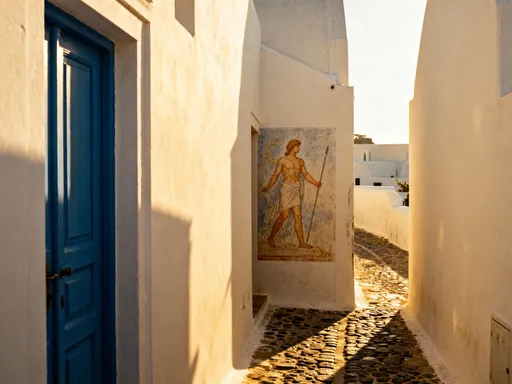
In contrast to the bold, colorful murals seen in major cities, Santorini’s street art is subtle, almost secretive. It does not shout for attention. Instead, it emerges quietly—on the side of an old well, beneath a stone archway, or along a shaded alleyway. These works are not graffiti in the conventional sense. They are carefully placed, often created by local artists or visiting cultural ambassadors, and they serve as visual narratives of the island’s past and present.
In villages like Emporio and Megalochori, murals depict scenes from maritime history—the arrival of fishing boats, the construction of traditional caïques, or the role of the sea in daily life. Others illustrate mythological figures tied to the Cyclades, such as the lost city of Atlantis, said by some to have been inspired by Santorini’s own cataclysmic eruption around 1600 BCE. These images are not merely decorative; they are acts of remembrance, connecting younger generations to stories that might otherwise fade.
Some murals carry social messages, reflecting the island’s relationship with tourism, environmental preservation, or community resilience. One piece in a quiet corner of Pyrgos shows a child holding a seedling, with the words “We grow with the land” painted in Greek beneath. It’s a gentle reminder of sustainability, a theme increasingly important as the island faces the pressures of seasonal tourism and climate change. Another, in Akrotiri, honors the women who once wove nets and managed households while men were at sea—a tribute to quiet strength and endurance.
Discovering these murals requires a slower pace and a curious eye. They are not marked on official maps, nor are they part of guided tours. Finding them feels like uncovering a secret, a reward for those who wander without a strict agenda. For travelers, these quiet artworks offer a different way of understanding Santorini—not through grand monuments, but through the small, meaningful gestures embedded in the landscape. They remind us that culture is not always loud; sometimes, it speaks in whispers.
Festivals That Keep Culture Alive
One of the most powerful ways to experience Santorini’s living culture is through its local festivals—many of which remain off the radar of mainstream tourism. These gatherings are not staged performances but authentic expressions of community life, rooted in religious tradition, seasonal rhythms, and collective memory. From spring through autumn, villages across the island host events that blend music, dance, food, and art in ways that feel both timeless and immediate.
In July, the village of Vlychada holds a small maritime festival celebrating the return of the fishing boats. The evening begins with a blessing of the sea, followed by live music played on traditional instruments like the lyra and laouto. Locals dance in the square, their movements passed down through generations. There are no choreographed routines for tourists—just people dancing together, often with children joining in. Food is shared freely: grilled octopus, tomato fritters, and local wine served in clay cups. The atmosphere is warm, inclusive, and deeply rooted in place.
Other festivals have a more artistic focus. In August, Pyrgos hosts a week-long cultural event featuring theater performances, poetry readings, and open-air exhibitions. Many of the works are created by island residents, including schoolchildren who present drawings inspired by local legends. The festival takes place in the village’s central courtyard, surrounded by ancient walls and shaded by plane trees. It’s a rare opportunity to see how art functions as a communal activity, not a commodity. Attendance is respectful and low-key—visitors are welcome, but expected to observe quietly and avoid intruding on private moments.
For travelers, participating in these festivals requires mindfulness. It’s essential to remember that these are not entertainment spectacles but meaningful cultural practices. Dressing modestly, arriving on time, and refraining from intrusive photography are simple ways to show respect. The best approach is to listen more than speak, to observe before joining. When done with humility, attendance becomes a form of cultural exchange—one that honors the host community while deepening the visitor’s understanding of the island’s soul.
Art Meets Nature: Open-Air Installations with a View
Santorini’s dramatic landscape has long inspired artists, but some choose not to bring nature into the gallery—they bring art into nature. Scattered across the island are open-air installations that respond directly to the environment: sculptures perched on cliffs, wire figures dancing in the wind, and stone carvings hidden among vineyards. These works do not dominate the landscape; instead, they converse with it, changing with the light, the weather, and the seasons.
One striking example is a series of bronze figures installed along a quiet trail between Prophet Elias and Skaros Rock. Created by a Greek sculptor who lived on the island for decades, the pieces depict solitary figures in motion—walking, looking out to sea, or pausing in thought. From a distance, they blend into the volcanic rock, but up close, their details emerge: the texture of the metal, the way the wind has left traces on their surfaces. The path itself becomes a gallery, each turn revealing a new perspective, a new moment of reflection.
Another installation, near the vineyards of Exo Gonia, uses recycled materials to create a sound sculpture that hums in the breeze. Made from old farming tools and metal sheets, it produces a soft, melodic tone when the wind passes through—like a forgotten song carried on the air. Visitors often sit nearby, closing their eyes to listen. It’s a rare fusion of art, memory, and nature, reminding us that creativity can be both visual and auditory, permanent and ephemeral.
These works are not marked on standard tourist maps, and finding them requires curiosity and a willingness to wander. Some are accessible via well-maintained trails; others require a short hike or a detour from main roads. The journey is part of the experience—walking through fields of capers and wild thyme, passing ancient stone walls, and catching unexpected views of the caldera. For those who seek them, these installations offer moments of stillness and wonder, where art does not interrupt the landscape but enhances it.
How to Travel Like a Cultural Explorer
Discovering Santorini’s hidden art and culture begins with a shift in mindset. It means moving away from checklist tourism—rushing from viewpoint to viewpoint—and embracing a slower, more intentional way of traveling. This approach values depth over breadth, connection over consumption, and presence over performance. It is not about seeing more, but about seeing differently.
Start by allowing extra time in each village. Instead of spending an hour in Oia for sunset photos, stay longer—return in the morning when the light is soft and the streets are quiet. Sit in a courtyard café, observe daily life, and let the rhythm of the place unfold. Visit during the shoulder seasons—April to early June, or September to October—when the island is less crowded and locals are more open to interaction. These periods offer not only milder weather but also greater access to authentic experiences.
Seek out small exhibitions, artist cooperatives, and cultural centers. Many of these are promoted through word of mouth or local bulletin boards, not international booking platforms. Ask at family-run hotels or village shops for recommendations—they often know about upcoming events or private studio openings. When visiting galleries or workshops, engage with kindness and curiosity. A simple “Can you tell me about this piece?” can lead to a meaningful conversation. Avoid treating artists as photo opportunities; instead, treat them as the cultural custodians they are.
Support the local economy in ways that matter. Purchase handmade crafts directly from artisans, attend small festivals with a respectful presence, and choose restaurants that source ingredients locally. These choices may seem small, but collectively, they help sustain the island’s cultural ecosystem. Most importantly, travel with humility. Recognize that you are a guest in a living community, not the center of its story. By doing so, you become part of a quieter, more enduring form of tourism—one that honors the past, supports the present, and helps preserve the future.
Santorini’s true magic isn’t just in its views—it’s in the quiet moments of creative exchange, the handmade, the unseen. By seeking out its hidden art and culture, travelers don’t just see the island; they feel it. And in doing so, they help preserve its soul for generations to come.