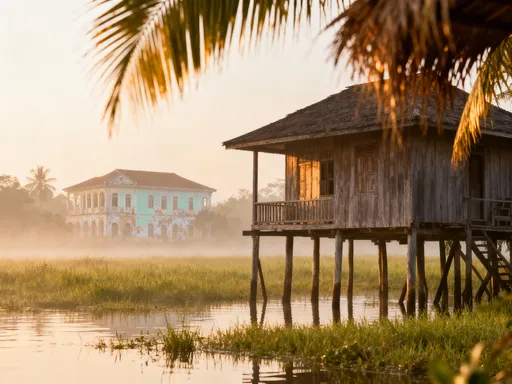
You Won’t Believe the Hidden Architecture of Si Phan Don
Si Phan Don isn’t just about lazy river views and sunsets—it’s a quiet showcase of Southeast Asian architectural soul. Tucked in southern Laos, this island group blends French colonial whispers, traditional Lao wooden stilt houses, and rustic bamboo huts shaped by monsoon winds. I was stunned by how design here follows life—simple, elevated, open, and in rhythm with nature. This is architecture you feel, not just see. More than aesthetics, every structure tells a story of adaptation: to seasonal floods, to humidity, to the slow pulse of river life. In a world rushing toward glass towers and concrete sprawl, Si Phan Don holds a quieter truth—architecture can be humble, temporary, and deeply wise. It invites travelers not only to look, but to listen, to notice, and to respect.
The Island Vibe: What Makes Si Phan Don Unique
Spread across the Mekong River in southern Laos, Si Phan Don—meaning "Four Thousand Islands"—is a vast archipelago of silhouetted landmasses, sandbars, and emerald islets. While the name suggests overwhelming scale, only a handful of islands are permanently inhabited, with Don Det, Don Khon, and Don Som serving as the primary destinations for visitors. This selective habitation has preserved a rare sense of stillness, where life unfolds at the pace of drifting water and rustling palm fronds. The built environment mirrors this tranquility: low-rise, unobtrusive, and deeply attuned to the natural rhythm of the region. Unlike bustling tourist zones elsewhere in Southeast Asia, Si Phan Don resists commercial sprawl. There are no high-rises, no neon signs, no traffic—only footpaths, bicycles, and wooden boats connecting one quiet corner to the next.
What defines the architectural character here is its responsiveness to place. Buildings are not imposed on the landscape; they grow from it. The dominant design principles—minimalism, open-air layouts, and use of local materials—emerge directly from daily realities. Homes and guesthouses often lack solid walls, instead relying on louvered shutters or woven panels that allow cross-ventilation. Roofs are steeply pitched to handle torrential rains, and structures are raised on stilts, sometimes several meters high, to survive the Mekong’s seasonal swell. This is not architecture for show, but for survival and comfort in a humid, flood-prone environment. The result is a built form that feels organic, almost temporary, as though it could dissolve back into the jungle without resistance.
The Mekong River is the lifeblood of Si Phan Don, and its influence on settlement patterns cannot be overstated. During the dry season, from November to April, water levels drop dramatically, revealing sandbanks and creating gentle channels perfect for swimming and kayaking. In contrast, the wet season transforms the landscape—entire sections of islands flood, pathways vanish, and communities rely on boats for mobility. This duality shapes everything from the height of doorways to the placement of storage areas. Even guesthouses built for tourism are elevated, often on recycled wooden posts or concrete pillars, ensuring safety during high water. Access routes are designed with seasonal change in mind: some paths are usable only in dry months, while others follow elevated causeways. This deep awareness of the river’s power fosters a culture of flexibility, where buildings are not permanent monuments but adaptive shelters, designed to endure and evolve.
French Colonial Echoes on Don Khon
Among the quiet bamboo huts and wooden homes of Si Phan Don, one island stands out for its historical depth: Don Khon. As part of French Indochina from the late 19th century until Laos gained independence in 1953, this region briefly became a node in colonial infrastructure projects. The French sought to harness the Mekong’s flow, particularly around the Khone Phapheng Falls, the continent’s largest waterfall by volume. Their vision was ambitious—to create a navigable route through the falls via a railway that would bypass the impassable rapids. Though the project ultimately failed, its remnants remain embedded in Don Khon’s landscape, offering a rare glimpse into a fleeting era of industrial ambition in an otherwise untouched region.
The most visible legacy is a scattering of colonial-era villas, their pastel facades now softened by time and tropical moisture. These structures, painted in faded ochres, sea greens, and pale blues, feature wide wraparound verandas supported by slender columns—an architectural response to the region’s heat. High ceilings, thick masonry walls, and large shuttered windows were designed to promote airflow and reduce indoor temperatures, long before the advent of air conditioning. Corrugated metal roofs, imported from France, deflect heavy rains while radiating heat quickly. Though many of these buildings are now in partial ruin, their proportions and details reflect a European sensibility adapted to tropical conditions. They stand as quiet monuments to a colonial past, neither celebrated nor erased, but simply present.
Equally evocative are the remnants of the narrow-gauge railway and the rusting steam locomotive that once hauled cargo and passengers along a short stretch of track. The locomotive, now resting in a shaded grove near the island’s main path, has become an informal landmark—a symbol of technological aspiration in a place where nature ultimately prevailed. The railway bed, overgrown with grass and roots, occasionally reappears beneath cyclists’ tires, a ghostly trace of what might have been. What makes this history especially compelling is how locals have reclaimed these structures. Some colonial buildings have been converted into guesthouses, cafes, and small museums, their verandas now hosting travelers sipping iced coffee instead of colonial officers reviewing logistics. This adaptive reuse reflects a practical wisdom—why demolish when you can repurpose? The colonial past is not reenacted, but quietly absorbed into the present.
Traditional Lao Stilt Houses: Form Meets Function
Across Si Phan Don, the most common dwelling is the traditional Lao stilt house, an architectural form perfected over centuries of living with water and heat. Constructed primarily from teak, bamboo, and woven palm leaves, these homes rise gracefully above the ground on wooden posts, their elevated platforms offering protection from floods, wild animals, and dampness. The design is both practical and symbolic: the space beneath the house serves multiple purposes—storage, workspace, shelter for livestock, and even social gathering during hot afternoons. This under-house area, shaded and ventilated, becomes an extension of daily life, where families repair fishing nets, weave mats, or share meals on low stools.
The structural logic of stilt houses is rooted in environmental necessity. The Mekong’s annual flooding can rise several meters, submerging lower ground for weeks at a time. By elevating living spaces, residents ensure that their homes remain habitable even during peak water levels. The open design—often with minimal walls and wide overhanging eaves—facilitates constant airflow, crucial in a climate where humidity regularly exceeds 80 percent. Roofs are steeply pitched and thatched with palm or grass, or covered in corrugated metal, to shed heavy monsoon rains efficiently. In some cases, decorative elements such as carved bargeboards or finials reflect regional identity, though ornamentation is generally restrained, favoring utility over display.
While common across Laos, stilt houses in Si Phan Don exhibit subtle regional variations. Compared to the more ornate versions found in Luang Prabang or northern villages, those here are simpler, reflecting the islanders’ reliance on readily available materials and their emphasis on resilience. Roof pitches may be slightly steeper to handle heavier southern rains, and the use of bamboo lattice walls is more prevalent for breathability. However, this tradition faces growing pressure from modernization. In recent years, some families have begun replacing wooden stilts with concrete pillars and thatched roofs with metal sheets or tiles. While these changes offer greater durability, they also mark a shift away from sustainable, low-impact building. The loss of traditional craftsmanship is a quiet concern, as fewer young people learn the skills of timber framing and thatch weaving. Yet, on many corners of Don Det and Don Som, the classic stilt house endures—elevated, open, and deeply in harmony with its surroundings.
Bamboo and Thatch: The Art of Impermanent Design
In Si Phan Don, not all architecture is meant to last. Some of the most beautiful structures—riverfront bars, family kitchens, temporary shelters—are built from bamboo and thatch, materials that grow abundantly in the region and can be harvested sustainably. These constructions embody a philosophy of impermanence, where buildings are not seen as permanent fixtures but as part of a natural cycle. When a bamboo wall begins to sag or a thatched roof loses its tight weave, it is not repaired indefinitely but replaced, allowing the old materials to return to the earth. This approach stands in stark contrast to the global trend of durable, long-lasting construction, yet it offers profound lessons in sustainability and humility.
The craftsmanship behind these temporary buildings is anything but simple. Skilled artisans weave bamboo strips into strong, flexible walls that resist warping and cracking. Joints are lashed with natural fibers or secured with wooden pegs, avoiding the need for nails or metal fasteners. Roofs are carefully layered with dried grass or palm leaves, starting from the eaves and working upward, ensuring that rainwater flows smoothly off without seeping in. The peaked shape of these roofs is not merely aesthetic—it maximizes runoff and creates an air pocket that insulates against heat. Even in the heaviest downpours, a well-built thatched roof keeps interiors dry and relatively cool. These techniques are passed down through generations, often learned informally through observation and practice.
From an environmental standpoint, bamboo and thatch represent a zero-carbon building model. Bamboo is one of the fastest-growing plants on Earth, reaching maturity in just three to five years, and it sequesters carbon at a high rate. When harvested responsibly, it regenerates without replanting. Thatch, typically made from local grasses, is fully biodegradable and requires no industrial processing. Together, these materials create structures with minimal ecological footprint. More than that, they reflect a cultural acceptance of transience—buildings are not monuments to ego or permanence, but functional, temporary shelters that serve their purpose and then return to the soil. This mindset, deeply rooted in Lao Buddhist values, teaches that all things are impermanent, and that beauty can reside in the fleeting.
Eco-Lodges and Modern Adaptations
As tourism has grown in Si Phan Don, so has the demand for comfortable yet responsible accommodations. In response, a new generation of eco-lodges has emerged—structures that blend traditional design with modern sustainability features. These lodgings are not replicas of stilt houses, but thoughtful reinterpretations. They maintain the elevated form, steep roofs, and open layouts of local architecture while incorporating solar panels, rainwater harvesting systems, and composting toilets. The goal is not to imitate the past, but to honor its principles—harmony with nature, use of local materials, and low environmental impact—while meeting contemporary expectations for comfort and hygiene.
One of the most successful adaptations is the use of vaulted ceilings inspired by traditional stilt houses but constructed with modern techniques. These ceilings promote natural ventilation, drawing hot air upward and allowing cooler breezes to circulate at ground level. Some lodges incorporate glass windows with wooden shutters, offering guests the option to close off rooms at night while still maintaining airflow during the day. Floors may be tiled or polished concrete for durability, but they are often raised to match the height of surrounding homes, ensuring visual continuity. The color palette remains earthy—creams, browns, and soft greens—avoiding the jarring brightness of imported designs.
A few standout accommodations have become models of sustainable tourism. One guesthouse on Don Det uses reclaimed teak for its frames, solar-powered LED lighting, and outdoor showers fed by gravity-fed water tanks. Another on Don Khon features bamboo bungalows with thatched roofs and private verandas overlooking the river, where guests can watch fishing boats drift by at dawn. These establishments often employ local staff, source food from nearby farms, and contribute to community projects, reinforcing the idea that responsible tourism benefits everyone. Yet challenges remain. Some newer constructions prioritize aesthetics over authenticity, using imported materials or mimicking tropical styles from other regions. Others sacrifice ventilation for air conditioning, undermining the very principles they claim to uphold. The key lies in balance—respecting tradition without romanticizing poverty, offering comfort without compromising sustainability.
Community Spaces: Temples, Schools, and Markets
Beyond private homes, the public architecture of Si Phan Don reflects the values of community, spirituality, and shared life. Central to every village is the Buddhist wat, a temple complex that serves as both a place of worship and a social hub. These wats feature tiered roofs with gracefully upturned eaves, often painted in gold or lacquered wood, symbolizing the layers of enlightenment. Carved wooden panels depict scenes from the Buddha’s life, and open-air pavilions host morning prayers, festivals, and community meetings. Unlike grand temples in cities, those in Si Phan Don are modest in scale, built to serve small populations with quiet dignity. Their placement—often on slightly elevated ground, surrounded by frangipani trees—creates a sense of serenity, separate from but connected to daily life.
Education infrastructure follows a similar ethos. Village schools typically consist of one or two open-air classrooms with wide eaves to shield students from sun and rain. Desks are simple, often made of wood, and lessons are conducted in Lao, sometimes with support from visiting volunteers. The lack of enclosed walls is not a sign of underdevelopment, but a deliberate choice—natural ventilation reduces the need for fans or air conditioning, and the open design fosters a connection to the environment. Children learn under the shade of large trees, their voices mingling with bird calls and rustling leaves. This integration of education and nature reflects a broader cultural value: that learning happens not only in books, but in the world around us.
Markets and riverfront shops complete the picture of communal life. Floating markets, though smaller than those in Thailand or Vietnam, operate along the banks, where vendors sell fresh fruit, grilled fish, and handmade crafts from wooden canoes. Dockside stalls, built on stilts over the water, provide shade and direct access for boats. These structures are simple—often just a thatched roof on four posts—but strategically placed to serve both locals and travelers. The layout of these spaces emphasizes accessibility and interaction, with no barriers between buyer and seller. This informal economy thrives on trust, reciprocity, and seasonal rhythms, much like the architecture that supports it. Every community building, whether a wat, school, or market, is shaped by need, not spectacle—designed to serve, to shelter, and to endure.
Why This Architecture Matters—And How to Experience It Right
The architecture of Si Phan Don is more than a collection of buildings—it is a living response to land, water, and time. It embodies centuries of accumulated wisdom, where form follows function, materials are chosen with care, and beauty arises from simplicity. Yet this heritage faces real threats. The creeping spread of concrete construction, driven by tourism development and modernization, risks erasing the very qualities that make the islands unique. Imported architectural styles—glass-fronted bungalows, tiled roofs with no ventilation, closed-off rooms—disrupt the harmony between built and natural environments. As more visitors arrive, the pressure to build faster, higher, and more permanently grows, threatening the delicate balance that has defined island life for generations.
The value of slow travel has never been more important. To truly appreciate Si Phan Don’s architecture, one must stay longer than a day or two. Rushing through on a bicycle tour offers views, but not understanding. Sitting on a stilt-house veranda at dusk, listening to the creak of wood and the lap of water, reveals more than any guidebook can. Talking to a local builder, watching them weave bamboo or repair a thatched roof, provides insight into a way of life that values resilience over permanence. These moments of connection deepen appreciation and foster respect. They remind us that architecture is not just about shelter, but about culture, memory, and relationship to place.
Travelers can support this legacy through mindful choices. Opting to stay in locally built guesthouses, rather than imported-style resorts, directly sustains traditional craftsmanship. Avoiding designs that mimic foreign aesthetics helps preserve regional identity. Respecting private homes—by not entering without permission or photographing families without consent—maintains trust and dignity. Supporting community projects, buying local crafts, and minimizing waste all contribute to a tourism model that honors, rather than exploits, the islands’ way of life. The goal is not to freeze Si Phan Don in time, but to ensure that change happens with intention and respect.
In the end, the architecture of Si Phan Don teaches a quiet but powerful lesson: that the best buildings do not dominate the landscape, but listen to it. They rise with the floods, breathe with the wind, and return to the earth when their time is done. They are not monuments to human achievement, but partners in a shared existence with nature. To experience them is to slow down, to observe, and to recognize that wisdom often speaks softly—through the creak of a wooden beam, the shadow of a thatched roof, the stillness of a river at dawn.