Walls That Whisper: Stepping Into Pompeii’s Living Architecture
Walking through Pompeii feels like entering a frozen moment in time. The ash-preserved city isn’t just ruins—it’s a living story etched in stone, tile, and frescoed walls. I was stunned by how much personality these ancient buildings still hold. From grand villas to simple bakeries, every structure reveals clever design and daily life details. This isn’t just history—it’s architecture with soul. Let me take you through the secrets carved into Pompeii’s streets and homes, where every column has a tale to tell.
The First Step: Entering a City Suspended in Time
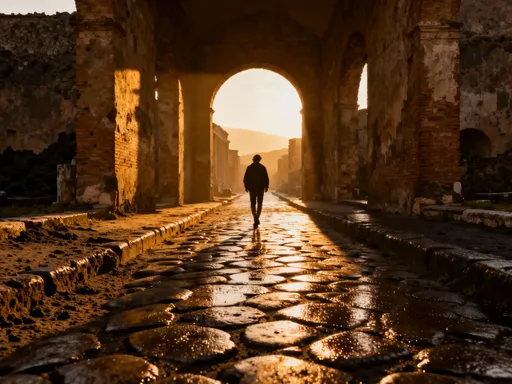
As visitors pass through Porta Marina, the main southern entrance to Pompeii, they are immediately met with a sense of stepping across a threshold—not just into an archaeological site, but into a fully realized ancient world. The cobblestone streets, worn smooth by centuries of foot and cart traffic, slope gently downward, revealing the careful engineering of Roman urban planning. Layers of volcanic ash, hardened over time, still encase parts of the walkways, preserving the exact contours of the city as it existed on that fateful day in 79 AD. The height of the buildings flanking the road—some still standing two or even three stories tall—creates a sense of enclosure, as if the city is whispering its secrets just above a murmur.
Pompeii’s urban grid follows a classic Roman design, laid out in a series of orthogonal streets known as *cardines* (north-south) and *decumani* (east-west). This precise alignment wasn’t merely aesthetic; it reflected the Romans’ deep commitment to order, functionality, and public health. The wide main roads accommodated chariots and commercial wagons, while narrower side streets served residential areas. Drainage channels ran along the curbs, designed to carry rainwater and waste away from homes and public spaces. Raised stepping stones at intersections allowed pedestrians to cross streets without stepping into muddy or waste-filled runoff—a practical solution that also regulated cart traffic, ensuring wheels aligned precisely with the gaps.
What makes Pompeii so uniquely powerful is the way its architecture tells stories. Unlike many ancient cities where only foundations remain, here entire facades, doorways, and interior spaces survive. The placement of a bakery next to a residence, the grand entrance of a villa facing a public square, or the modest workshop tucked beneath an apartment—all speak to the social fabric of the city. The buildings themselves become archives, revealing not only how people lived, but how they organized their communities, expressed status, and interacted with one another. Architecture in Pompeii wasn’t just about shelter; it was a language of identity, class, and civic life.
Homes of the Elite: Villas as Status Symbols
Among the most striking structures in Pompeii are the grand homes of the city’s wealthy elite, none more impressive than the House of the Faun. Covering nearly 3,000 square meters, this sprawling residence is one of the largest private homes ever discovered in the Roman world. Its name comes from a bronze statue of a dancing faun found in the central peristyle garden, a testament to the owner’s taste for Hellenistic art and mythology. The house is arranged around two main open spaces: a front atrium and a rear peristyle courtyard, each serving distinct social and functional purposes.
The atrium, a hallmark of elite Roman domestic architecture, functioned as both an entrance hall and a ceremonial space. Rainwater collected from the roof funneled into a shallow basin called the *impluvium*, which not only provided household water but also served as a cooling feature during hot Mediterranean summers. The surrounding walls were often painted with elaborate frescoes—mythological scenes, architectural illusions, or lush garden views—designed to impress guests and reflect the homeowner’s cultural sophistication. The interplay of light, water, and painted surfaces created an atmosphere of refined elegance, turning a practical feature into a symbol of status and taste.
Beyond the atrium, the peristyle garden offered a private retreat, surrounded by colonnades and filled with fountains, potted plants, and shaded walkways. This space was not only a place of relaxation but also a venue for hosting intimate gatherings and conducting business. The House of the Faun features intricate floor mosaics, including the famous “Alexander Mosaic,” which depicts the battle between Alexander the Great and Darius III. Though the original is now housed in the Naples National Archaeological Museum, a high-quality replica allows visitors to appreciate the artistry and narrative power of Roman domestic decoration.
These homes were more than luxurious dwellings—they were expressions of identity. The choice of artwork, the arrangement of rooms, and the integration of Greek-inspired elements all signaled the owner’s education, wealth, and cosmopolitan outlook. In a society where social standing was closely tied to public visibility, the home became a stage for performance and display. Even in death, these houses continue to speak, offering modern visitors a rare window into the values and aspirations of Pompeii’s upper class.
Everyday Spaces: The Architecture of Ordinary Life
While the grand villas capture the imagination, the true heartbeat of Pompeii lies in its modest homes and multi-story apartment buildings known as *insulae*. These structures housed the majority of the city’s population—artisans, shopkeepers, laborers, and their families. Unlike the sprawling villas of the elite, these homes were compact, often built around small interior courtyards or light wells to allow ventilation and natural light. Some were single-family dwellings; others were divided into multiple units, with living spaces stacked above ground-floor workshops or shops.
One of the most revealing aspects of these homes is how they incorporated beauty and dignity into everyday life. Even in modest residences, walls were painted with colorful frescoes—simple geometric patterns, floral motifs, or scenes of daily life. Floors might feature basic mosaic tiles or well-polished stone. Small courtyards, though not as elaborate as those in elite homes, provided private outdoor space for cooking, washing, or family gatherings. These details suggest that aesthetic pleasure was not reserved for the wealthy; it was an integral part of Roman domestic culture across social classes.
Shared facilities were common in densely populated areas. Public latrines, often located near baths or marketplaces, served multiple households. These stone-seated toilets, arranged in rows with a continuous water channel beneath, reflect an advanced understanding of sanitation for the time. Narrow staircases and low doorways in upper-level apartments indicate that space was at a premium, yet builders still prioritized functionality and safety. Some *insulae* show evidence of upper floors collapsing during the eruption, a reminder of the vulnerabilities of multi-story construction in a seismic zone.
Despite their simplicity, these homes reveal a deep sense of community and adaptation. The integration of work and living spaces—such as a blacksmith’s forge opening directly onto the street or a weaver’s loom set up in a back room—demonstrates how urban life in Pompeii was dynamic and interconnected. The architecture of ordinary life wasn’t just about survival; it was about creating a sense of place, dignity, and belonging within the fabric of the city.
Public Life in Stone: Forums, Baths, and Theaters
The Forum of Pompeii stands as the civic and religious center of the ancient city, a large open plaza surrounded by some of its most important public buildings. Once lined with porticoes and shaded by trees, the Forum hosted markets, political assemblies, legal proceedings, and religious ceremonies. Temples dedicated to Jupiter, Apollo, and the imperial cult dominated the northern end, their raised platforms and columned facades conveying divine authority and civic pride. The Basilica, a large hall for legal and commercial matters, stood on the eastern side, its interior once filled with magistrates, merchants, and citizens conducting the business of daily life.
Adjacent to the Forum, the Stabian Baths offer one of the best-preserved examples of Roman public bathing culture. Divided into separate sections for men and women, the baths followed a standard sequence: visitors moved from the *frigidarium* (cold room), through the *tepidarium* (warm room), to the *caldarium* (hot room), each heated by an underground furnace system known as a *hypocaust*. Hot air circulated beneath the floors and within the walls, creating a comfortable and therapeutic environment. The baths were more than places for hygiene—they were social hubs where people met, gossiped, exercised, and conducted informal business. Mosaic floors, painted walls, and decorative fountains enhanced the experience, turning a utilitarian function into a ritual of well-being.
Entertainment was another cornerstone of public life, and Pompeii’s theaters reflect this vibrant cultural scene. The Large Theater, carved into a natural hillside, could seat up to 5,000 spectators and hosted dramatic performances, musical events, and public speeches. Its semi-circular design and tiered seating ensured excellent acoustics, allowing even those in the back rows to hear clearly. Nearby, the Odeon served as a smaller, roofed theater for musical recitals and council meetings, offering shelter from the sun and rain. The architecture of these spaces was carefully calibrated to enhance sound, visibility, and audience comfort, demonstrating the Romans’ sophisticated understanding of performance and civic engagement.
Together, these public buildings formed the backbone of urban life. They were spaces where citizens came together—not just as individuals, but as members of a shared community. The design of the Forum, baths, and theaters reflects a society that valued order, participation, and collective experience. Even in their ruined state, these structures continue to evoke the rhythm of daily life in an ancient city where public space was sacred, and architecture served the people.
Commerce and Craft: Shops and Workspaces Built to Last
Scattered throughout Pompeii’s streets are hundreds of small commercial spaces known as *tabernae*—narrow, street-facing shops that combined retail, production, and living quarters. These modest but vital structures were the engines of the city’s economy. Many featured a counter with openings facing the street, allowing vendors to serve customers directly while storing goods behind or above. Above the shop, a staircase often led to a small apartment where the owner and family lived, creating a vertical integration of work and home life.
One of the most fascinating examples is the bakery near the Forum. Here, large stone mills—powered by donkeys—were used to grind grain into flour. Deep circular ovens, still blackened by centuries of use, lined the back wall, where bread was baked daily. Archaeologists have found carbonized loaves in remarkable condition, their shape and texture preserved by the same volcanic heat that destroyed the city. These discoveries offer tangible proof of the city’s self-sufficiency and the importance of food production in daily life.
Other specialized workshops reveal the diversity of Pompeii’s economy. Fulleries—laundries that cleaned and treated woolen garments—used large vats filled with water, urine (a natural ammonia source), and clay to degrease and whiten fabric. The urine was collected from public urinals, a practical recycling system that highlights the Romans’ resourcefulness. Wine bars, known as *thermopolia*, dotted the city, serving hot food and drinks to passersby. These establishments featured counters with embedded ceramic jars (*dolia*) that held wine, stew, or other ready-to-eat meals. Some even had decorative frescoes advertising their offerings, functioning as early forms of branding.
The design of these commercial spaces reflects a high degree of urban efficiency. Shops were strategically located near major thoroughfares or public spaces to maximize foot traffic. Their standardized layout—counter, storage, workspace, and living quarters—suggests a shared architectural vocabulary that prioritized functionality and accessibility. The survival of so many of these structures allows modern visitors to trace the flow of goods, services, and social interaction that once animated the city’s streets.
Engineering Behind the Beauty: Water, Roads, and Urban Planning
Beneath the aesthetic appeal of Pompeii’s architecture lies a foundation of practical engineering that ensured the city’s functionality and resilience. One of the most remarkable systems was its water distribution network. Fed by an aqueduct from the nearby Serino springs, fresh water entered the city and flowed through a series of lead or terracotta pipes to public fountains, private homes, and baths. Over 25 public fountains have been identified, spaced at regular intervals to ensure that residents never had to walk far for clean water. Wealthier households could pay for direct connections, a privilege that underscored social hierarchy even in access to basic utilities.
The city’s roads were paved with durable volcanic stone, quarried from the same geological forces that would eventually destroy it. These stones were cut into large, interlocking blocks that provided a stable, slip-resistant surface—essential during wet weather. The raised stepping stones at intersections not only helped pedestrians stay dry but also forced carts to slow down, reducing wear on the road and improving safety. Beneath the streets, a network of covered drains carried stormwater and wastewater away from populated areas, preventing flooding and maintaining hygiene.
Urban planning in Pompeii also considered environmental factors. Many homes were oriented to maximize sunlight in winter and shade in summer, with windows and courtyards positioned to catch cooling breezes. The alignment of streets often followed the natural topography, minimizing excavation and enhancing drainage. Evidence of repairs and modifications—such as reinforced walls or rebuilt shop fronts—shows that the city was not static but constantly adapting to the needs of its inhabitants. These features reflect a society that valued both beauty and practicality, where form and function were not opposites but partners in design.
Preservation and Modern Understanding: Learning From the Ashes
The catastrophic eruption of Mount Vesuvius, while devastating, created an unparalleled opportunity for preservation. The thick layers of volcanic ash and pumice that buried Pompeii acted like a time capsule, sealing buildings, artifacts, and even organic materials from decay. Unlike other ancient cities eroded by time or rebuilt over centuries, Pompeii offers an almost complete snapshot of urban life at a single moment. Wall paintings retain their vivid colors, wooden beams leave ghostly impressions in hardened ash, and delicate mosaics remain intact—all providing invaluable data for archaeologists and historians.
Modern techniques have deepened our understanding of Pompeii’s architecture. Laser scanning and 3D modeling allow researchers to reconstruct collapsed buildings and visualize how spaces were used. Petrographic analysis of building materials reveals where stones and mortars were sourced, shedding light on trade networks and construction practices. Studies of wear patterns on stairs, door hinges, and countertops offer insights into daily routines and human behavior. Even the famous plaster casts of victims—created by pouring liquid gypsum into voids left by decomposed bodies—help contextualize how people moved through and occupied these spaces in their final moments.
Perhaps most importantly, Pompeii teaches us about resilience and adaptation. The city was not a static monument but a living, evolving community. Repairs to earthquake damage from 62 AD show that its inhabitants were actively maintaining and improving their environment. The reuse of materials, the modification of shop fronts, and the expansion of homes all point to a dynamic urban culture. By studying these buildings, we gain more than historical knowledge—we gain perspective on how humans design spaces to meet both practical needs and emotional desires.
Pompeii’s architecture is more than ancient stone—it’s a blueprint of Roman life, frozen but still speaking. By walking its streets and reading its walls, we gain insight not just into the past, but into how people design spaces to live, work, and connect. These buildings remind us that great design endures, not just in structure, but in spirit.